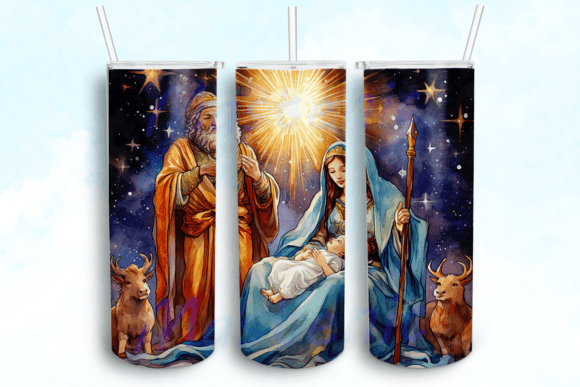
Nativity Sacred Scene for Embroidery: A Designer’s Review
When I first opened the Nativity s Sacred Scene Tumbler PNG, I was met with a quiet sense of reverence. The composition feels traditional yet intimate, reminding me of the classic hand-painted nativity creches I grew up around. Soft halos of light, the gentle curve of Mary’s posture, the manger’s humble shape—it all carries a natural warmth that is hard to find in overly commercialized holiday graphics. As a designer who regularly pivots between digital artwork and stitch-ready files, I immediately started mentally mapping how this visual would translate into thread on fabric, not just onto a tumbler.
The file comes in two variations—one straight and one tapered—both sized for 20oz skinny tumblers. That tells me the artwork was originally composed for a tall, narrow canvas, which is brilliant for certain embroidery projects and a little tricky for others. The elongated verticality of the scene means it naturally fits items like tote bag side panels, sleeve art, or the front of a structured apron, but it would need thoughtful editing if you plan to stitch it onto a square patch or a wide sweatshirt chest.
First Impressions of a Quietly Powerful Scene
The mood of this design is undeniably contemplative. The holy family is centered, and the surrounding elements—a star, silhouettes of animals, perhaps a shepherd’s crook—do not crowd the sacred figures. That restraint is a gift for embroidery. Too many nativity designs cram in every character, and the result becomes a muddy mess once you reduce it to stitch angles and underlay. This one breathes. The spacing between forms suggests that a skilled digitizer could preserve the satin stitch outlines without excessive trims, and the fill stitch areas would read clearly even on textured fabrics like linen or fleece.
I could immediately picture this on a cream-colored tote bag design, stitched in soft gold, deep navy, and muted olive threads. The artwork’s silhouette-heavy nature also means it would make a strong applique design candidate, especially for a baby quilt or a nursery throw pillow where you want a tactile, layered feel.
Real Project Test: From Tumbler Art to Embroidered Keepsake
Let me walk you through a real scenario. A client recently asked me to create a set of custom embroidered kitchen towels for a holiday boutique. She wanted something religious but not overly ornate—something that would appeal to buyers looking for a thoughtful hostess gift. I pulled up the Nativity s Sacred Scene Tumbler PNG and began testing it in my mind.
The tapered version of the file seemed like a natural fit for the towel’s lower band, where a long horizontal embroidery field would sit. I imagined scaling the artwork down slightly, centering the manger scene, and adding a thin running stitch border beneath it. The silhouette clarity meant I could use a simple two-tone thread palette—deep burgundy for the main figures and a pale wheat color for the background elements—and still achieve a highly readable, elegant result. The stitch density would need to be reduced compared to a standard logo because terry cloth absorbs thread and can distort fine details. But the PNG’s overall shape, with its clear outer contour and minimal internal clutter, gave me confidence that the final stitch file would be manageable.
I also considered how this would look on a baby embroidery project. A soft cotton onesie with the nativity scene stitched small on the chest, perhaps in a single color like dusty rose or sage, would feel precious but not precious in a way that parents would be afraid to use it. The key is that the design’s emotional weight comes from its subject matter, not from fussy detail. That is exactly what you want for items that will be washed often and worn close to the skin.
Where the Design Really Shines in Embroidery
After spending time with the artwork, I can confidently say this piece belongs on projects where the stitch itself becomes part of the story. The Nativity s Sacred Scene Tumbler PNG works beautifully for handmade product lines that emphasize heritage, faith, and craftsmanship. Think of the following applications:
- Custom apparel like lightweight sweatshirts, where the design can be stitched on the upper back or a front pocket area
- Linen pillow covers for a rustic, farmhouse-inspired holiday collection
- Embroidered patches with a merrowed edge, sold as separate items or attached to canvas bags
- Aprons for a church gift shop or a small bakery with a faith-based brand identity
- Tea towels as part of a seasonal set, paired with simpler star or vine motifs
- Blankets with a corner placement, especially for a christening or baby dedication gift
Because the source file is a Graphics asset in the Crafts category, you are not buying a ready-to-stitch machine embroidery design. You are buying the visual blueprint. That means you have full creative control over how it gets digitized, but you also bear the responsibility of making sure the conversion respects the artwork’s integrity. For Etsy seller shops and small shop product lines, this is an advantage. You can tailor the final stitch file to your specific hoop size, fabric type, and thread palette rather than being locked into someone else’s digitizing choices.
Fabric and Surface Considerations for Real-World Stitching
Not every embroidery surface is friendly to a design born from a tumbler template. The vertical orientation that works so well on a skinny tumbler can become a challenge on wider, shorter items. If you are planning to stitch this onto a cap or a hat, you will need to seriously reconsider the layout. The curved surface of a cap front fights against a tall, narrow composition. You might need to crop the scene, rearrange elements, or use only a portion of the artwork—perhaps the star and the manger—to make it fit a hoop size that works on a cap frame.
Stretchy fabric also demands caution. A sweatshirt embroidery project on a highly elastic fleece will require a sturdy stabilizer and possibly a reduced stitch density to prevent puckering around the fine details. The star’s rays, if digitized with long satin stitches, could easily distort on a garment that stretches during wear. I always recommend testing on a scrap piece of the same fabric first, especially for a design with religious significance that customers will examine closely.
Dark fabrics present another layer of thought. The PNG’s moody, silhouette-forward style suggests it was designed with a lighter background in mind. If you stitch it on black or charcoal fabric, the contrast could disappear unless you adjust the thread colors significantly. I would test both light and dark fabric mockups, and I would also convert the artwork to grayscale to see how the values hold up without color. A digital embroidery file created from this PNG needs to maintain legibility even when the color palette is stripped back for a monochrome or tone-on-tone finished product.
Designer Notes for Digitizing and Production
Before you commit to a full production run, there are several practical steps I always take with artwork like this. These apply whether you are creating a personalized gift or stocking inventory for a craft business.
First, test the design on scrap fabric. I cannot stress this enough. Even a simple muslin run will reveal issues with small details, like the facial features of the figures or the texture of the stable roof. If those details are too tiny, they will close up under thread or become blobs. You may need to simplify the artwork slightly during digitizing, removing the smallest elements while preserving the overall silhouette.
Check your thread color contrast carefully. The warmth of the scene depends on subtle shifts between the figures and the background. A poorly chosen thread pairing can flatten the entire composition. Hold your thread spools next to each other under natural light, not just under your machine’s LED. I often find that a slightly warmer gold than I initially pick makes a huge difference in maintaining the sacred, gentle mood of the original Nativity s Sacred Scene Tumbler PNG.
Review the stitch density. This is not a corporate logo that needs to be bulletproof. It is a delicate, evocative scene. Over-digitizing it with dense fill will make it stiff and lifeless. A lighter fill, perhaps with a textured pattern, can actually enhance the handcrafted feel. I lean toward a running stitch for background elements and a moderate satin stitch for the main figures, keeping the overall stitch count reasonable for a holiday embroidery item that should feel soft, not armored.
Confirm your hoop size. The tumbler dimensions—roughly 8.5 inches tall by 3 inches wide for a 20oz skinny—give you a generous field for embroidery. But if your machine’s largest hoop is 4x4 inches, you will need to scale the design down significantly. At that size, the internal details may become problematic. I would recommend a hoop of at least 5x7 inches to maintain comfortable spacing, and ideally larger if you want to keep the artwork’s proportions intact for a tote bag design or a pillow cover.
Inspect the small details in black and white. Before you finalize the digitized file, view it in a monochrome preview. This reveals whether the design relies too heavily on color to separate elements. A strong embroidery design should hold up even in a single-color test stitch. The Nativity s Sacred Scene Tumbler PNG has a naturally strong silhouette, so I suspect it will pass this test well, but I never skip it.
Use proper stabilizer. For towels, I use a medium-weight cutaway. For fleece, a no-show mesh. For linen, a tear-away with a temporary adhesive spray. The fabric choice dictates the stabilizer, and the stabilizer dictates how the final stitch looks. I have seen beautiful digitized files ruined by the wrong backing, and a design this meaningful deserves better.
Finally, confirm licensing before selling finished items. The product listing states it is an instant downloadable file for 20oz skinny tumblers, which implies a personal or limited commercial use typical of digital embroidery file assets in the Crafts space. But always read the seller’s terms. If you plan to use this on products you sell, whether in a physical craft fair booth or through an online Etsy seller storefront, you need to know you are covered. A quick message to the shop owner can save you a headache later.
How It Affects Your Brand and Customer Experience
Beyond the technical stitching considerations, I think about how a design like this lands with the person who will eventually own the finished product. A nativity scene is personal. It carries emotional and spiritual weight. If you stitch it poorly, with misaligned details or harsh colors, you risk disappointing a customer who bought it as a meaningful gift. But if you get it right, the result is a personalized gift that feels like a family heirloom.
I have seen customers react to well-executed faith-based embroidery with genuine quiet. They touch the stitches, trace the outline, and often tell me who they are giving it to. That kind of connection is what separates a simple craft business from a brand that people remember and return to. The Nativity s Sacred Scene Tumbler PNG gives you the artistic foundation to build that kind of connection, but the execution is entirely in your hands.
For handmade product photography, the tapered tumbler shape of the original file also translates beautifully to printable mockup displays. Even if your final product is a stitched pillow or a sewn patch, you can use the PNG in your listing images to show the artwork clearly, helping buyers understand the design before they see the textured thread version. This dual use—the PNG as a mockup asset and as a digitizing source—adds real value for a small shop product owner who needs to streamline their workflow.
Final Thoughts From the Worktable
After examining the Nativity s Sacred Scene Tumbler PNG from every angle I can think of, I would call it a quietly strong asset for the right embroidery creator. It is not a plug-and-play stitch file, and it is not intended to be. It is a thoughtfully composed piece of artwork that asks you to bring your own digitizing skill and creative judgment to the table. For a designer who enjoys the process of translating image into thread, that is a welcome invitation.
I would use this design confidently on items where the vertical shape can be honored—tea towels, tall pillow covers, the back of a chore coat, or a hanging wall banner. I would approach it with more caution on caps, tiny baby bibs, or highly elastic performance wear. The mood is reverent, the silhouette is clear, and the potential for a gorgeous commercial embroidery product is absolutely there, provided you do your testing, choose your fabrics wisely, and respect the original artwork’s gentle spirit.
For embroidery designers, creative entrepreneurs, and makers who serve customers looking for faith-based, heirloom-quality stitched goods, this is a design worth exploring. It brings a sacred stillness to the craft table, and that is something I do not see every day among the sea of generic holiday files.